Writing
Our Philosophy
At Morton, we believe that all children can become confident, independent writers who understand the power and purpose of writing. We aim to develop writers who think carefully about why they are writing and who can adapt their language, tone and structure to engage different audiences and achieve different purposes. Purpose-led writing is at the heart of our curriculum because we know that when children understand the reason for their writing, they make more meaningful choices about vocabulary and grammar.
We believe that children write most successfully when they have something to say. Our writing curriculum is therefore rooted in high-quality texts, rich vocabulary, purposeful talk and immersive experiences that inspire ideas and deepen understanding. Before writing, children are given opportunities to explore language, discuss their thinking and build knowledge, enabling them to write with greater confidence, creativity and depth.
From the earliest stages of learning, we recognise the importance of developing secure transcriptional skills. Through the teaching of phonics, spelling and handwriting, children develop the fluency needed to communicate their ideas effectively in writing.
Our aim is that every child leaves Morton as a confident, resilient writer who can communicate clearly, write for a range of audiences and purposes, and take pride in their work.
Our Approach
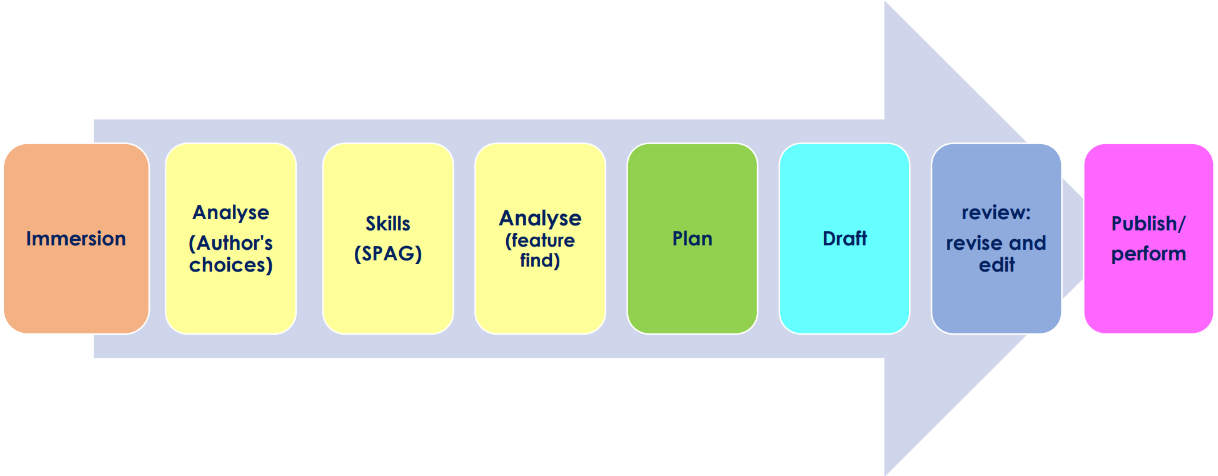
At Morton, we follow a carefully sequenced writing process that enables pupils to build the knowledge, vocabulary and skills they need to write confidently and with purpose.
Each writing unit begins with an immersion phase, where pupils explore high-quality texts, rich vocabulary and engaging experiences or visual stimuli. This develops background knowledge, sparks ideas and provides a meaningful context for writing. Every unit is driven by a clearly defined 'so that…' writing outcome, helping children understand the purpose of their writing and the impact they want it to have on the reader.
As the unit progresses, pupils analyse model texts before learning and practising the grammar features needed for the final outcome. Grammar is always taught within the context of writing, enabling children to understand not only how to use language features correctly, but also why writers choose them.
Children are given opportunities to plan, draft, edit and publish their writing, receiving feedback throughout the process to help them refine and improve their work. We encourage pupils to reflect on their writing, celebrate their progress and take pride in producing high-quality outcomes for real audiences and purposes.